This week produced the highest options premium income since I started tracking the portfolio.
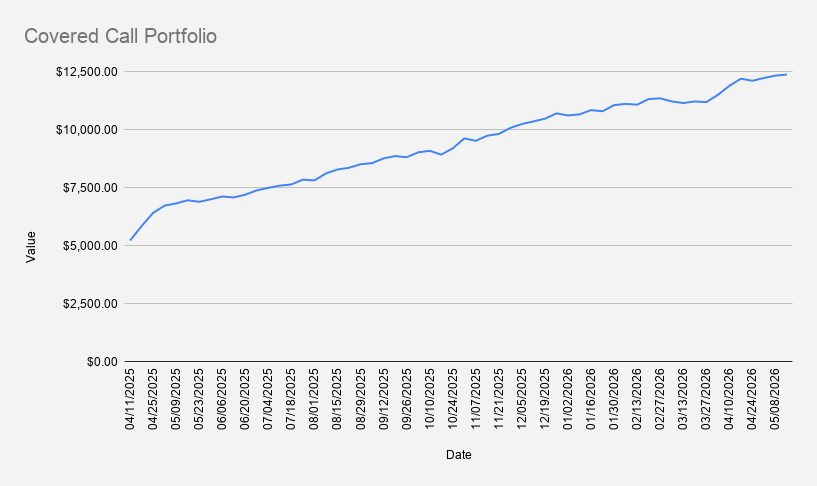
While the portfolio gained a relatively modest 0.36%, the underlying activity was far more interesting. A sharp rally in NVIDIA (NVDA), the introduction of Netflix (NFLX) credit spreads, and a strategic shift away from Pfizer (PFE) all contributed to what became a record premium-generating week.
NVDA Continues to Drive the Portfolio
The biggest story this week was NVDA.
At one point, shares traded above $230, extending an already impressive rally. While strong stock performance is generally welcome, it creates an interesting challenge for covered call sellers.
Our existing NVDA covered call had become extremely deep in the money, effectively capping the upside of the position.
As a result, I rolled the covered call from the November expiration to June 27, 2027.
One lesson I continue to relearn with covered calls is that they work exceptionally well in flat or moderately bullish markets, but they can become frustrating during strong bull runs.
Even though the position remains profitable, it is difficult watching a stock continue rising while gains become capped by a short call.
For now, NVDA remains the anchor position in the portfolio, and preserving the long-term holding remains more important than maximizing short-term option income.
If you're new to covered calls, this is one of the trade-offs investors accept in exchange for generating recurring premium income.
Why I Added NFLX Credit Spreads
After NVDA's rally, I became less comfortable using it as the primary source of weekly premium income.
Strong momentum often attracts traders to sell more options, but extended moves can reverse quickly and create difficult situations for option sellers.
Rather than increasing risk, I decided to diversify.
This week I opened:
NFLX May 22, 2026 84/79 Bull Put Credit Spread
My plan is simple:
Test NFLX credit spreads for approximately ten weeks and evaluate whether Netflix deserves a permanent place in the portfolio.
One of the advantages of credit spreads is that they can be deployed across multiple stocks without requiring large amounts of capital.
This is one reason why they have become one of my preferred strategies for smaller accounts.
For readers unfamiliar with the strategy, see:
Bull Put Spread Strategy: A Complete Beginner's Guide to Selling Credit Spreads for Income
Current Options Positions
- NVDA May 22, 2026 197.5/185 Bull Put Credit Spread
- NFLX May 22, 2026 84/79 Bull Put Credit Spread
- 2x BMY Jun 18, 2026 50/46 Bull Put Credit Spread
- DBK Jun 19, 2026 24/20 Bull Put Credit Spread
- ARCC Sep 18, 2026 16 Cash-Secured Put
- NVDA Jun 17, 2027 $125 Covered Call
Most of the premium generated by the portfolio currently comes from bull put credit spreads, which have become one of my preferred strategies for smaller accounts because of their defined risk and capital efficiency.
Ending the Pfizer Wheel Strategy
This week our PFE puts expired worthless.
Rather than continuing the Wheel Strategy, I decided to stop selling puts on Pfizer.
Instead, I plan to accumulate approximately 0.5 shares per week as a long-term dividend investment.
This decision reflects a broader shift in portfolio priorities.
While options remain the primary income engine, I also want the portfolio to gradually accumulate productive assets capable of generating future dividend income.
Reinvesting Premium Into New Shares
Using premium collected from NVDA and NFLX positions, I purchased:
- 0.1 shares of NVDA
- 0.2 shares of NFLX
- 0.5 shares of PFE
This remains one of the core ideas behind the portfolio. Rather than withdrawing option income, I use part of the premium to expand long-term holdings. Over time, even small additions can compound into meaningful positions.
As a result, projected annual dividend income increased to $64.17. The dividend income itself remains relatively small.
The real objective is creating a system where option premium finances future portfolio growth without requiring constant capital contributions.
Record Premium Income, But Realistic Expectations
This week generated: $245.90 in options premium
While this is a record for the portfolio, I don't expect this pace to continue indefinitely. In my experience, one of the biggest mistakes options traders make is extrapolating unusually strong weeks into the future. A more realistic expectation remains closer to: $100 per week in average premium income
Interestingly, that has become one of my primary portfolio goals. If you're interested in the math behind that target, see:
Can You Really Earn $100 Per Week Selling Options?
Margin Debt Remains a Priority
Current margin balance remains approximately: -$3,130 At this week's premium generation rate, the debt could theoretically disappear within a few months. However, markets rarely remain this favorable for long.
My expectation is that reducing margin debt will remain a multi-year project extending into 2027. And honestly, that's perfectly acceptable.
One of the most important lessons options trading teaches is that survival matters more than speed.
Looking Ahead
Next week's primary event is NVDA earnings. Following such a strong rally, I would welcome a period of consolidation and reduced volatility. Stable markets are often better environments for premium sellers than explosive rallies.
The positions I will be monitoring most closely are:
- NVDA 197.5/185 Bull Put Spread
- NFLX 84/79 Bull Put Spread
Should either position come under pressure, the plan remains unchanged:
- Roll when appropriate
- Prefer collecting additional credit
- Prioritize portfolio stability over short-term perfection
Key Takeaway
This week reinforced a lesson that applies to almost every options strategy: The goal isn't maximizing premium. The goal is building a repeatable process.
Whether through covered calls, cash-secured puts, or credit spreads, consistent risk management and gradual portfolio growth remain the foundation of the strategy.
Related Reading
- Bull Put Spread Strategy: A Complete Beginner's Guide to Selling Credit Spreads for Income
- Can You Really Earn $100 Per Week Selling Options?
- How to Manage a Credit Spread When the Trade Moves Against You
Disclaimer: This trade journal reflects personal portfolio activity and is provided for educational and informational purposes only. It should not be considered investment advice or a recommendation to buy or sell any security or derivative instrument.
Join the OptionsBrew newsletter
Get practical notes on options income, trade adjustments, and risk management.